
Last updated November 16, 2026
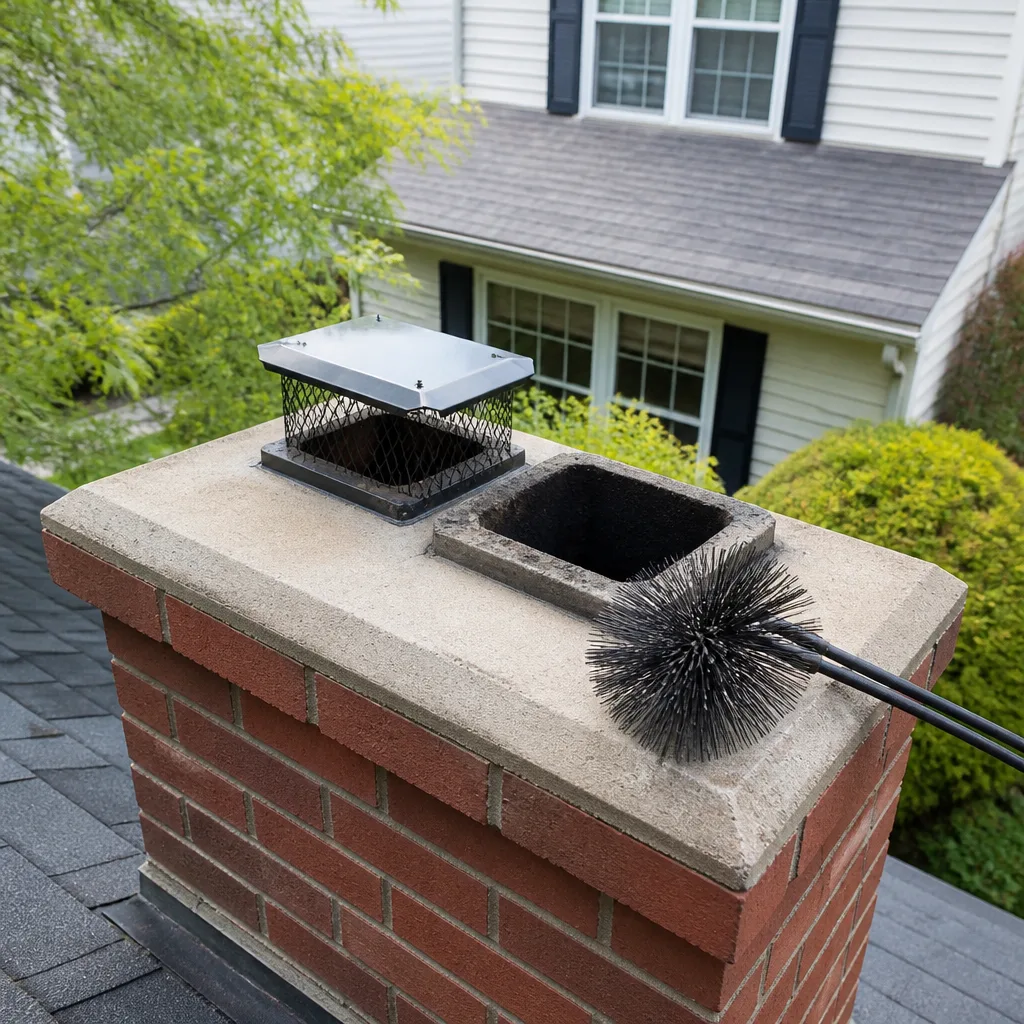 Sweep & inspection
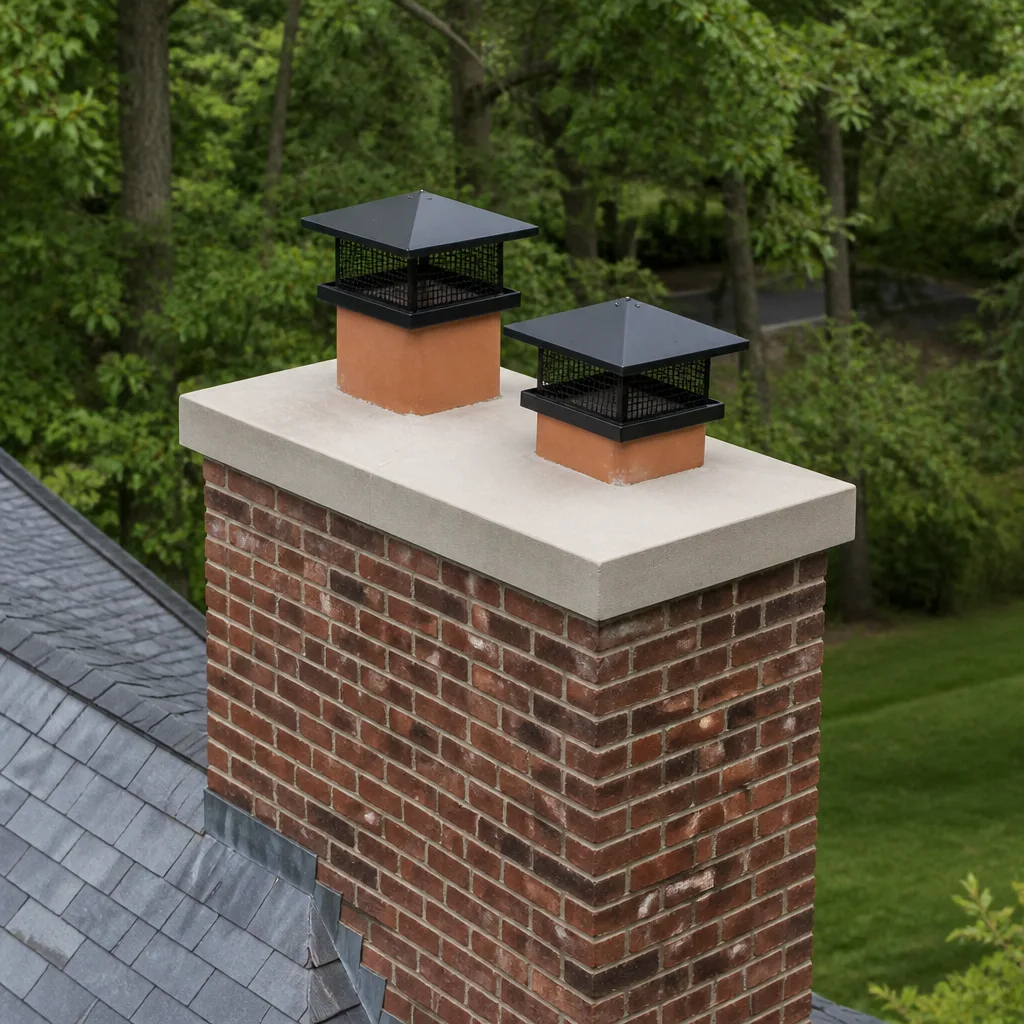 Caps & crowns
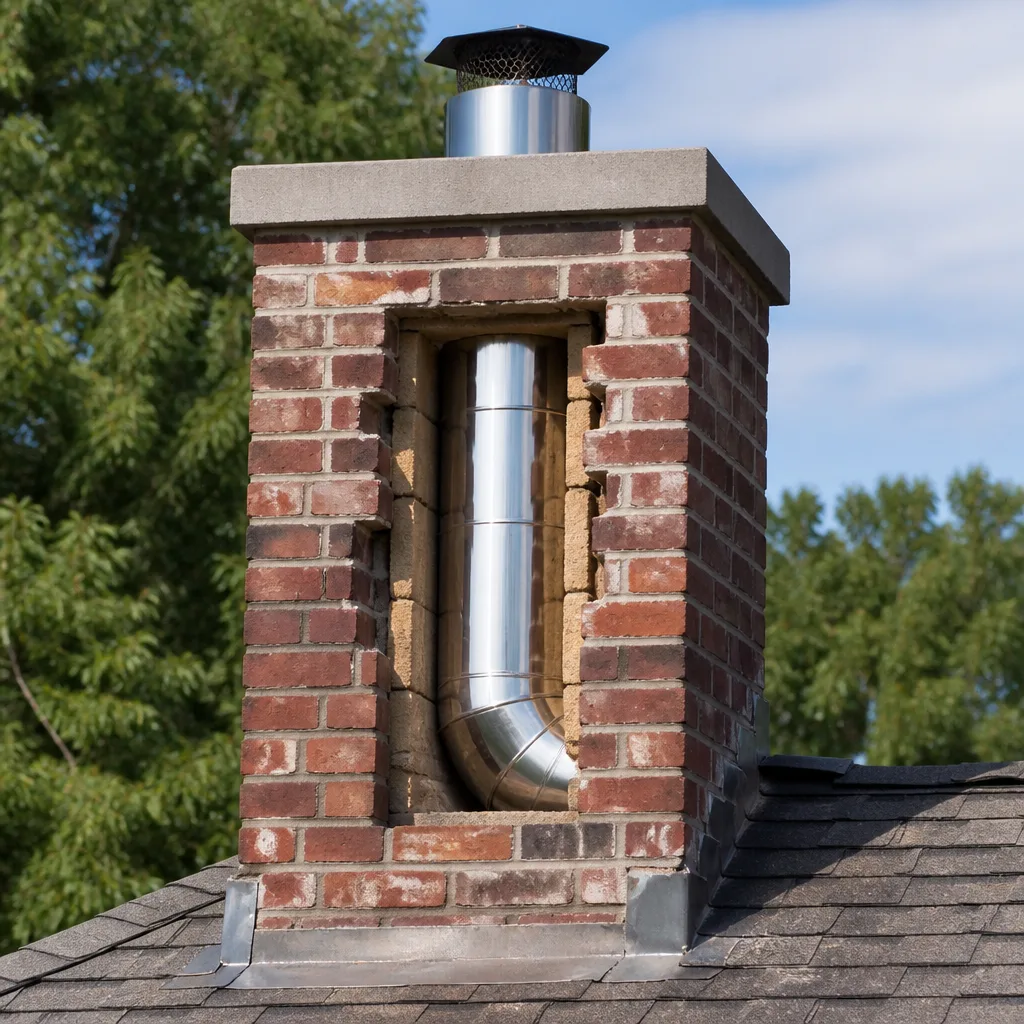 Flue relining
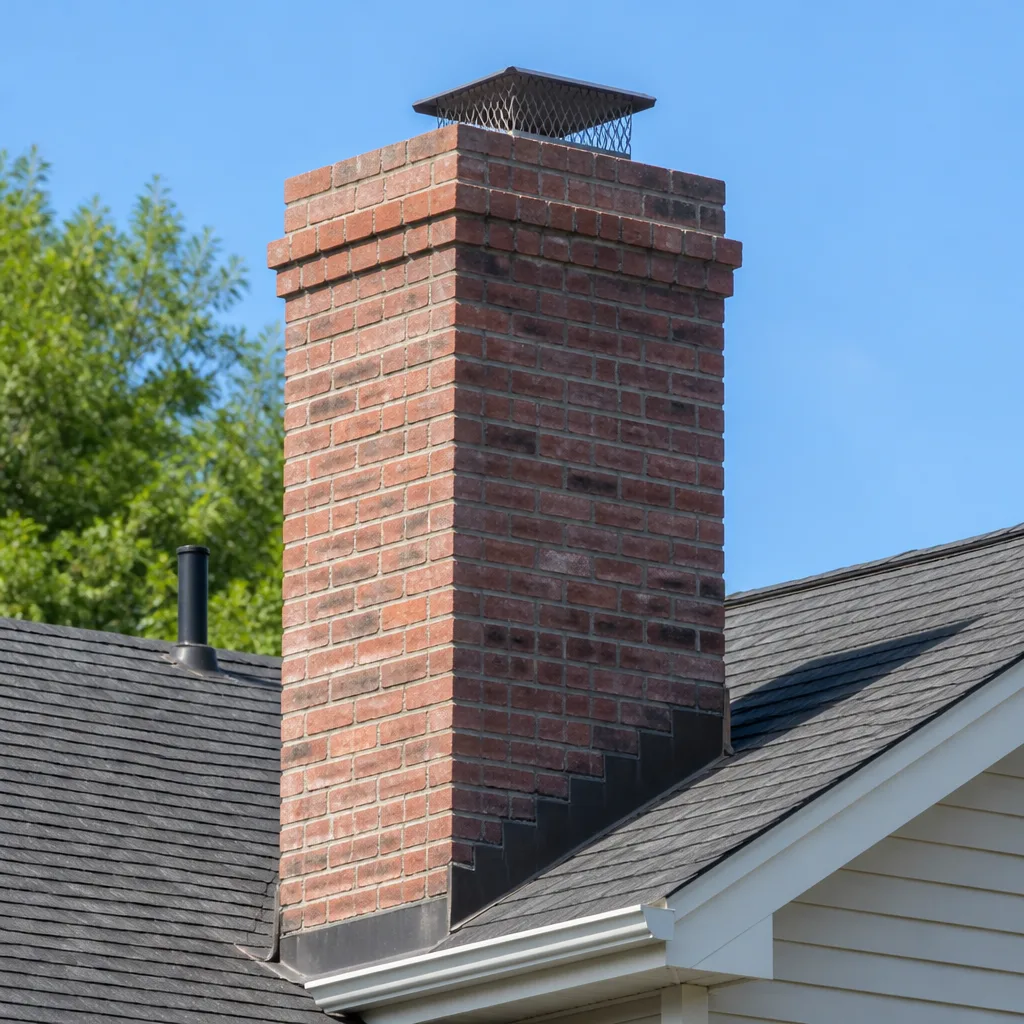 Masonry repair
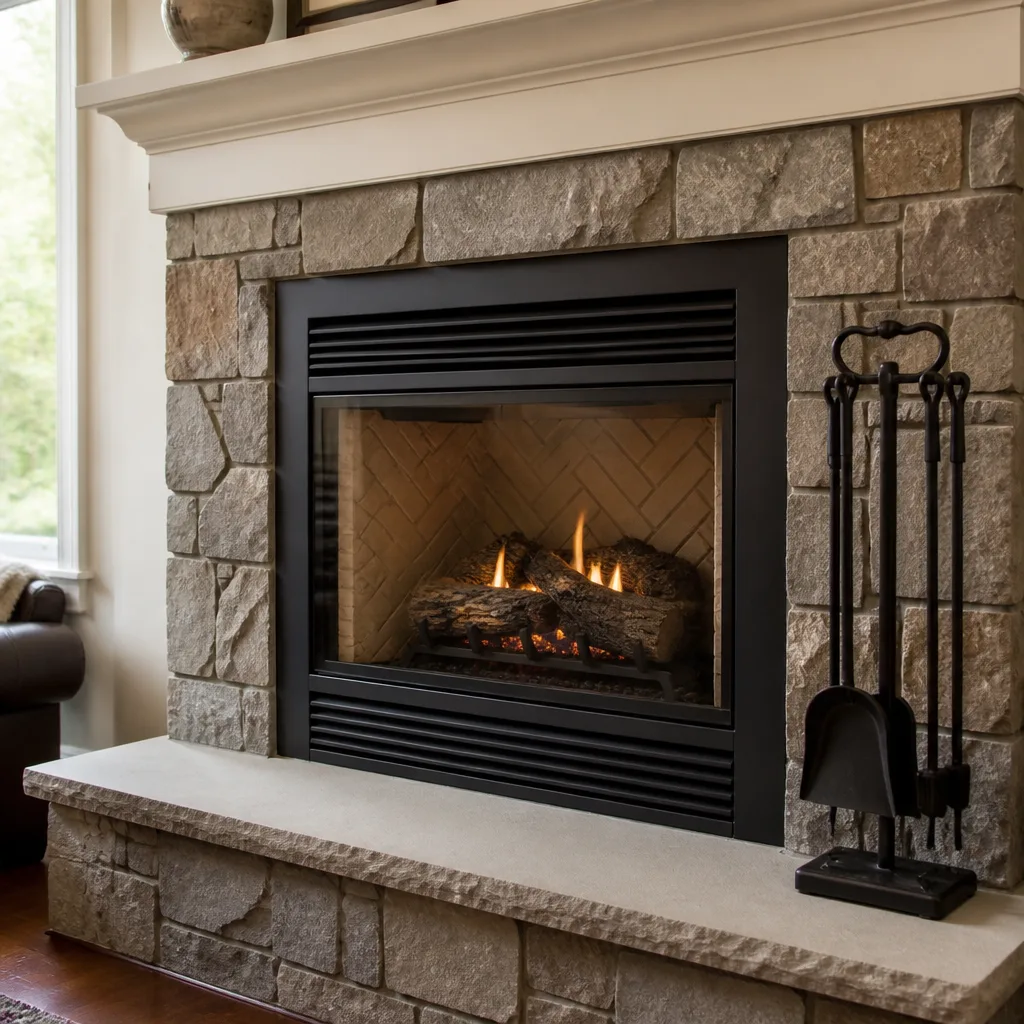 Gas fireplace service
Level 1 sweep and inspection to the NFPA 211 annual standard - flue, crown, cap, and flashing checked and photographed
Chimney sweep logs do not sweep chimneys. They loosen some creosote - which then falls where a brush and vacuum still have to collect it.
Chimney Sweep Maintenance Checklist for Mesquite Homeowners
Most homeowners in Mesquite treat chimney care as an October task. That’s backward. The damage that ruins a first fall fire usually happens in June, July, and August, when nobody’s thinking about the fireplace at all. Summer hail, high winds, and months of heat cycling work on the cap, crown, and flashing while the firebox sits empty. By the time cool weather arrives, the problem is already set. This guide walks through a full-year checklist built for Mesquite conditions: what to check yourself, what to watch for, and what needs a trained set of eyes with a camera. You’ll learn how to document your chimney year over year so slow deterioration gets caught while it’s still a small repair, not a large one.
Quick Answer
A sound chimney maintenance checklist for a Mesquite home has three layers: seasonal ground-level checks you can do yourself (cap, crown, flashing, and the firebox), post-storm checks after hail and high-wind events, and an annual professional inspection with a camera sweep. Households burning more than two cords of wood a year need a mid-season check as well. The goal is to catch liner damage, cracked crowns, and cap failures before they turn into smoke problems, water problems, or a fire risk.
Styles & brands we work with
- Sweep & inspection
- Caps & crowns
- Flue relining
- Masonry repair
- Gas fireplace service
Table of Contents
- Why a Chimney Checklist Has to Fit Mesquite
- What You Can Check Yourself From the Ground
- Post-Storm Inspection Triggers in Mesquite
- What Requires a Professional Set of Eyes
- Mid-Season Checkpoints for Heavy Wood Burners
- What “Looks Fine From Outside” Actually Conceals
- Documenting Your Chimney Year Over Year
- A Month-by-Month Checklist for Mesquite Homes
Why a Chimney Checklist Has to Fit Mesquite
A generic chimney checklist written for a cold-climate house doesn’t reflect what happens here. Mesquite sits in a part of North Texas where winter is mild, so chimneys aren’t stressed by deep sustained cold. What stresses them instead is the other end of the year. Summer heat bakes the exterior masonry, the crown, and the cap. Then a hail storm or a line of high wind comes through, and the small cracks that heat opened up get hammered.
That pattern has a specific consequence: most of the damage we find on Mesquite chimneys is water and storm damage from the warm months, not freeze damage from the cold ones. A crown that’s hairline-cracked in April can be a crown taking water into the masonry by September. A cap that lost a corner in a June storm lets rain straight down the flue through the summer and fall.
There’s a second local factor. Like much of the Dallas County area, homes in neighborhoods from Rodeo Center to Creek Crossing range from older builds with masonry chimneys to newer construction with factory-built and metal systems. Those two categories fail in different ways and need different checks. A masonry chimney tells you about its crown and flashing. A factory-built chimney tells you about its cap, its venting connections, and the condition of its liner.
What Actually Fails Here
In our experience working on chimneys across Mesquite, the failures that show up most often are:
- Caps that took hail or wind damage and no longer shed water or keep animals out
- Crowns with hairline cracks that widen through the summer
- Flashing that has pulled away from the roof or the masonry
- Liner damage that nothing on the outside hints at
- Storm debris and nesting material blocking the flue
- Draft and odor problems traced back to a flue that hasn’t been swept
Notice how many of those are invisible from the driveway. That’s the point of this guide. A checklist that only tells you to look at the outside of your chimney is a checklist that misses the most expensive problems.
What You Can Check Yourself From the Ground
You can evaluate a surprising amount of your chimney without climbing anything. Stay on the ground and use binoculars if you have them. The rule here is simple: look, don’t climb. Roof work around a chimney is steep, and a fall from a Mesquite roofline is a serious injury. Anything that requires getting up there belongs to a professional.
Here’s what to check, in order, ideally twice a year and always after a major storm:
- The cap. Is it still there, level, and intact? A missing or tilted cap is the single most common defect we find after a hail event. Look for dents, holes, or a cap that’s sitting crooked on the flue.
- The crown. That’s the concrete or masonry slab at the top of a masonry chimney. Look for cracks, crumbling edges, or a crown that’s pulling away from the flue tile.
- The flashing. This is the metal where the chimney meets the roof. Look for gaps, lifted edges, rust streaks, or roofing tar smeared over a joint, which usually means a previous patch rather than a fix.
- The masonry itself. Spalling brick, white staining, or missing mortar joints all point to water getting in.
- The firebox and damper. With the fireplace cold, open the damper and look up with a flashlight. You’re checking that it opens and closes freely and that you can’t see daylight through the flue or obvious gaps in the firebox brick.
- The smoke test. Light a small fire and watch. Smoke that rolls into the room instead of going up is a draft problem and a reason to stop and call.
What You’re Looking For
A healthy chimney cap sits flat, sheds water, and has intact screening or louvers. A healthy crown has no cracks you can see from the ground. A healthy flashing line is tight against both the roof and the masonry, with no tar patches. If any of those looks wrong, write it down and take a photo. You’ve just done half the work of a maintenance record.
If your home has a gas appliance venting through the chimney, add one more ground check: look for rust flakes, water stains, or corrosion on the vent pipe and around the appliance connection. A venting problem on a gas appliance is a carbon monoxide concern, not just a draft concern, and it’s a reason to call rather than wait.
Post-Storm Inspection Triggers in Mesquite
Mesquite gets hail and high wind, and those two events do more chimney damage than anything else in a typical year. The problem is that a storm-damaged chimney doesn’t announce itself. The fireplace still works. There’s no water on the ceiling yet. So the damage gets forgotten until the first cold snap, when a homeowner builds a fire and the living room fills with smoke from a cap that’s been sitting sideways for months.
Treat the following as automatic reasons to do a ground-level check:
- Any hail large enough to dent a gutter or mark a car
- A line of storms with damaging wind gusts or a confirmed tornado warning in the area
- Tree limbs down in your yard or a neighbor’s
- Visible debris on the roof or against the chimney
- Water stains on the ceiling or the chimney breast after heavy rain
- An odor of creosote, soot, or mustiness that wasn’t there before the storm
One more, and it’s the one most people skip: a storm that knocks out power for a day or more. If your home relies on a gas appliance venting through the chimney during that outage, check the vent and the appliance connection once the power’s back.
Why Hail Is the Worst Offender
Hail is heavy, it falls fast, and it lands on the highest, most exposed parts of a house. Caps take the hit, crowns take the hit, and masonry edges chip. The damage often looks cosmetic. It isn’t. A cracked crown takes water into the masonry every time it rains, and that water has nowhere to go but into the chimney structure and, eventually, into the house.
After a storm, a ground check takes ten minutes and catches the obvious problems. Anything you find goes on the list for a professional visit. If you’d rather skip the guesswork, call us. We answer 24/7, and a storm check-up is a straightforward inspection.
What Requires a Professional Set of Eyes
Some of what matters most about your chimney is invisible from outside and from inside the firebox. The flue liner, the smoke chamber, and the interior of the chimney above the damper can only be evaluated properly with a camera and a trained eye. That’s not a sales line; it’s a limit of what the human eye can see from any angle a homeowner can safely reach.
These are the checks that belong to a professional:
- The flue liner. Cracks, gaps, spalling, and separation between liner sections. A camera run tells you the condition of the whole flue, not just the part you can see.
- The smoke chamber. The tapered space above the damper. Rough or damaged surfaces there affect draft and are a creosote collection point.
- Creosote level. Glazed creosote buildup is a fire risk and isn’t something a homeowner can accurately judge from below.
- Chimney interior above the damper. Obstructions, animal nests, and storm debris lodged in the flue.
- The crown and flashing from above. A ground check catches obvious problems; an on-roof evaluation catches the ones that only show up close.
- Venting connections on gas appliances. Correct connection, condition, and whether the vent is venting where it should.
A professional sweep and inspection isn’t just cleaning. It’s a documented evaluation of every part of the system, with photos you can see and an explanation of what each finding means. That’s what turns a maintenance checklist from a guess into a record.
What the Inspection Should Include
A proper evaluation covers the firebox, damper, smoke chamber, flue, crown, cap, flashing, and exterior masonry. It should include a camera look at the flue interior and a report you can keep. If a chimney company hands you a verdict without showing you the evidence, ask to see it. You’re entitled to know what they found and why it matters.
For a deeper look at what a full chimney repair evaluation covers when problems are found, the repair side of the service explains how each defect is addressed.
Mid-Season Checkpoints for Heavy Wood Burners
If your household burns more than two cords of wood in a season, your chimney needs more than one annual visit. Two cords is a lot of fire. That volume of wood produces a corresponding volume of creosote, and creosote is the fuel in a chimney fire. Heavy burners should treat mid-season as a real checkpoint, not an afterthought.
The mid-season check covers three things:
- Buildup level. A camera inspection at the midpoint of the burn season tells you whether creosote is accumulating faster than expected. Wood type, moisture content, and how you run the fire all affect the rate.
- The cap and crown again. A season of burning is also a season of weather. Recheck the cap and crown at midseason so summer storm damage doesn’t ride into winter unnoticed.
- Draft and performance. If draft has gotten weaker since the start of the season, something has changed. Buildup, a partial obstruction, or a cap problem are the usual suspects.
Burn Season Habits That Reduce Buildup
You can slow creosote accumulation with a few habits. Burn seasoned wood, not green wood. Don’t choke the fire down to a smolder for long stretches, because cool, smoldering fires deposit more creosote than hot ones. Keep the flue warm once you’ve started a fire. And keep the damper working properly, since a damper that doesn’t seal correctly affects how the whole system drafts.
None of those habits replace an inspection. But they make the difference between a flue that sweeps clean every year and one that builds a glazed layer that’s much harder to remove. If you’re a heavy burner and haven’t had a midseason look, that’s a call worth making. Chimney sweep service includes the camera inspection that tells you exactly where you stand.
What “Looks Fine From Outside” Actually Conceals
This is the part of chimney maintenance that catches homeowners off guard. A chimney can look perfectly sound from the driveway and still have liner damage that makes it unsafe to use. The exterior shows weather damage. The interior shows what’s actually happening where the fire and the smoke go.
Here’s what an intact exterior can hide:
- Cracked or separated flue tiles. A gap between liner sections lets heat and gases reach the structure around the flue. That’s the pathway to a chimney fire spreading beyond the chimney.
- Spalled liner surfaces. Flaking and pitting inside the flue affect draft and create pockets where creosote collects.
- Glazed creosote. A hard, shiny, tar-like layer that forms from repeated cool fires. It’s combustible, and it doesn’t brush off like ordinary soot does.
- Obstructions. Nests, debris, or a collapsed liner section that partially blocks the flue. It’s often the reason a fire smokes into the room.
- Water intrusion behind the masonry. Water that gets past a cracked crown can travel through the chimney structure without leaving an obvious mark on the outside until it’s done real damage.
This is why a camera inspection matters so much. It’s the only way to see the interior of the flue without taking the chimney apart. On several Mesquite jobs, in our experience, the outside looked entirely normal and the camera found liner problems that had to be addressed before the fireplace could safely be used again.
What Happens When Damage Goes Unaddressed
Liner damage gets more expensive the longer it waits. A small gap can be addressed with a ceramic resurfacing system like HeatShield, which restores the flue without a full liner replacement. Once the damage is more extensive, the answer may be a full reline using a system like DuraFlex. Either way, the earlier the problem is found, the more options you have.
Camera evidence matters here. Any recommendation should come with photos you can see for yourself. If a company tells you the liner needs thousands of dollars of work and can’t show you why, ask for the pictures. You should never have to take it on faith.
Documenting Your Chimney Year Over Year
One inspection is a snapshot. A series of inspections over several years is a record, and a record is what lets you spot gradual deterioration before it becomes an expensive repair. This is the step most homeowners skip, and it’s the one that saves the most money over time.
Building a chimney maintenance record is straightforward. Keep it in a folder or a note on your phone, and add to it every time you check the chimney or have it inspected.
- Date each entry. Include the date of every ground check, every professional inspection, and every repair.
- Photograph the accessible parts. Take photos of the cap, crown, flashing, and firebox from the ground before and after each season. Name the files with the date so you can compare them side by side.
- Keep the inspection report and its camera photos. The report should describe the condition of each component. File it with your photos.
- Record what was found and what was done. Note any repair, any part replaced, and any recommendation that was deferred. If a fix could safely wait, write that down too, along with what to watch for.
- Compare year to year. Look for trends. A crown crack that’s visibly longer this year than last is a crack that’s moving. A cap that’s been patched once and is failing again tells you something.
What the Record Buys You
A maintenance record does three things. It catches slow deterioration. It makes future inspections faster and more targeted, because the sweep can see what was found last time. And it’s genuinely useful if you ever sell the house, since a documented service history is evidence of care rather than a vague claim.
For homeowners who’ve recently bought a Mesquite home, start the record with a baseline inspection. You don’t know when the chimney was last looked at, and a baseline gives you a starting point to compare against. For more on how we approach inspections and what a full Mesquite service visit covers, that page lays it out.
A Month-by-Month Checklist for Mesquite Homes
A calendar turns a list into a habit. The schedule below is built for Mesquite conditions: heavier ground-checking through storm season, a professional inspection ahead of the burn season, and a midseason review for heavy wood burners.
Spring
- Do a full ground check of the cap, crown, flashing, and firebox. Photograph everything.
- Book a professional sweep and inspection before the storm season ramps up. It’s easier to schedule in spring than in the fall rush.
- Clear any debris that winter left on the roof or against the chimney.
Summer
- After any hail event or high-wind storm, do a ground check within a few days. Look closely at the cap and crown.
- Check the flashing and the masonry for new cracks or staining after heavy rain.
- Keep an eye out for animal activity around the cap, since birds and squirrels look for openings this time of year.
Fall
- Schedule the pre-season professional inspection and sweep before the first fire. This is the visit that confirms the system is ready to use.
- Do a final ground check and file the photos with your record.
- Test the damper and do a smoke test with a small fire before you commit to a full evening burn.
Winter
- Heavy burners: book a midseason camera inspection about halfway through the burn season.
- Do a ground check after any winter storm, especially hail or high wind.
- Watch for changes in draft or odor as the season progresses, and note them in your record.
If you want to simplify the whole thing, Mesquite Chimney Sweep handles the sweep, the inspection, and any repair that comes out of it as one service. One call covers the sequence, and you keep the report.
Common Mistakes to Avoid
- Treating chimney care as an October-only task. In Mesquite, the storm season is where most damage happens, so a fall-only check misses the six months that did the damage. Check after storms, not just before the first fire.
- Skipping the camera inspection because the outside looks fine. An intact exterior tells you nothing about the flue liner, and liner damage is the most consequential problem a chimney can have. If nobody put a camera up the flue, the job isn’t finished.
- Climbing the roof to “just take a look.” Roof work around a chimney is steep and risky, and it’s the job most likely to end in an injury. Ground check plus a professional on-roof evaluation is the safe combination.
- Patching flashing with roofing tar instead of fixing it. A tar patch hides the problem for a season and then fails. If the flashing is separated, it needs to be properly re-flashed, not smeared over.
- Ignoring a cap that’s been damaged since the last storm. A missing or tilted cap lets water straight down the flue and gives animals an open door. It’s one of the cheapest fixes on the chimney and one of the most expensive to skip.
- Burning more than two cords a year with only one annual inspection. Heavy burners need a midseason look. Creosote accumulates faster than a once-a-year check will catch.
- Not keeping a record. Without photos and reports year over year, a slowly growing crack looks the same as it always did. Documentation is what turns a routine check into an early warning.
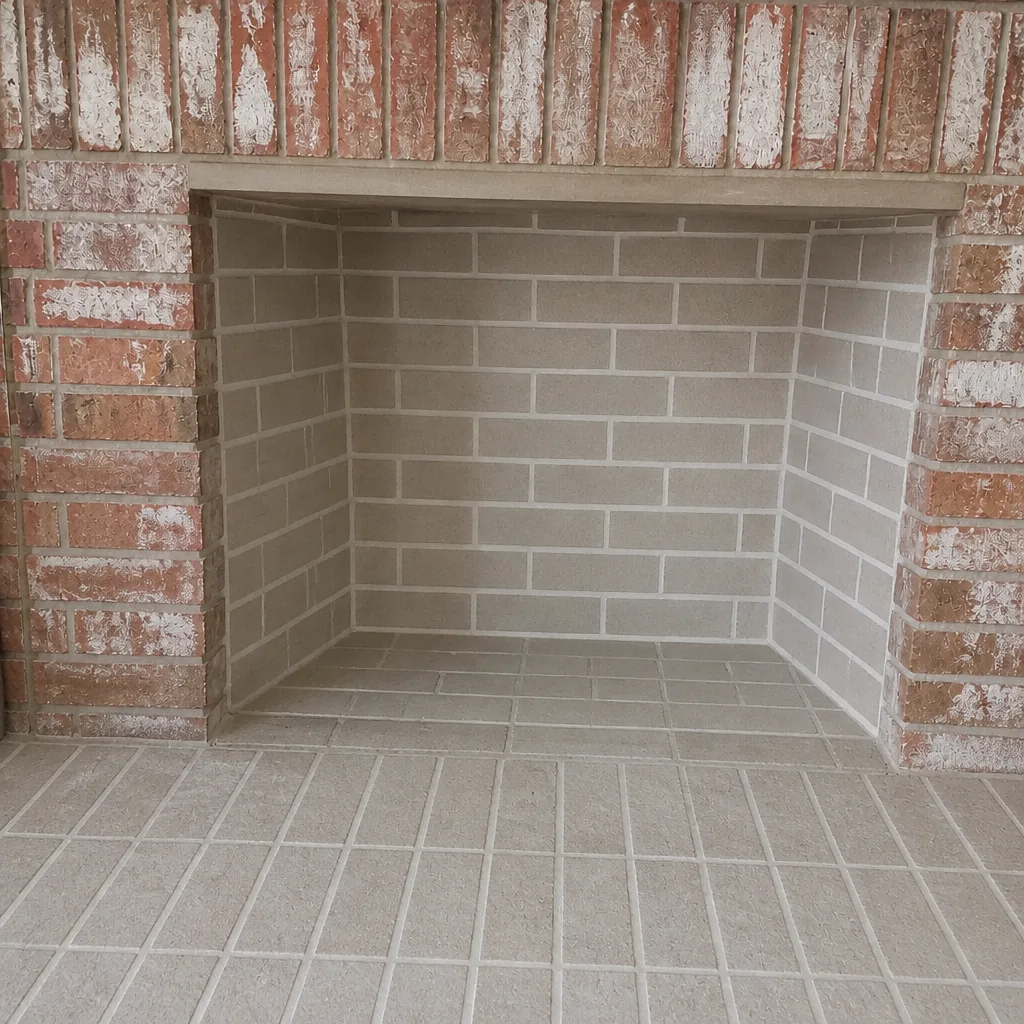
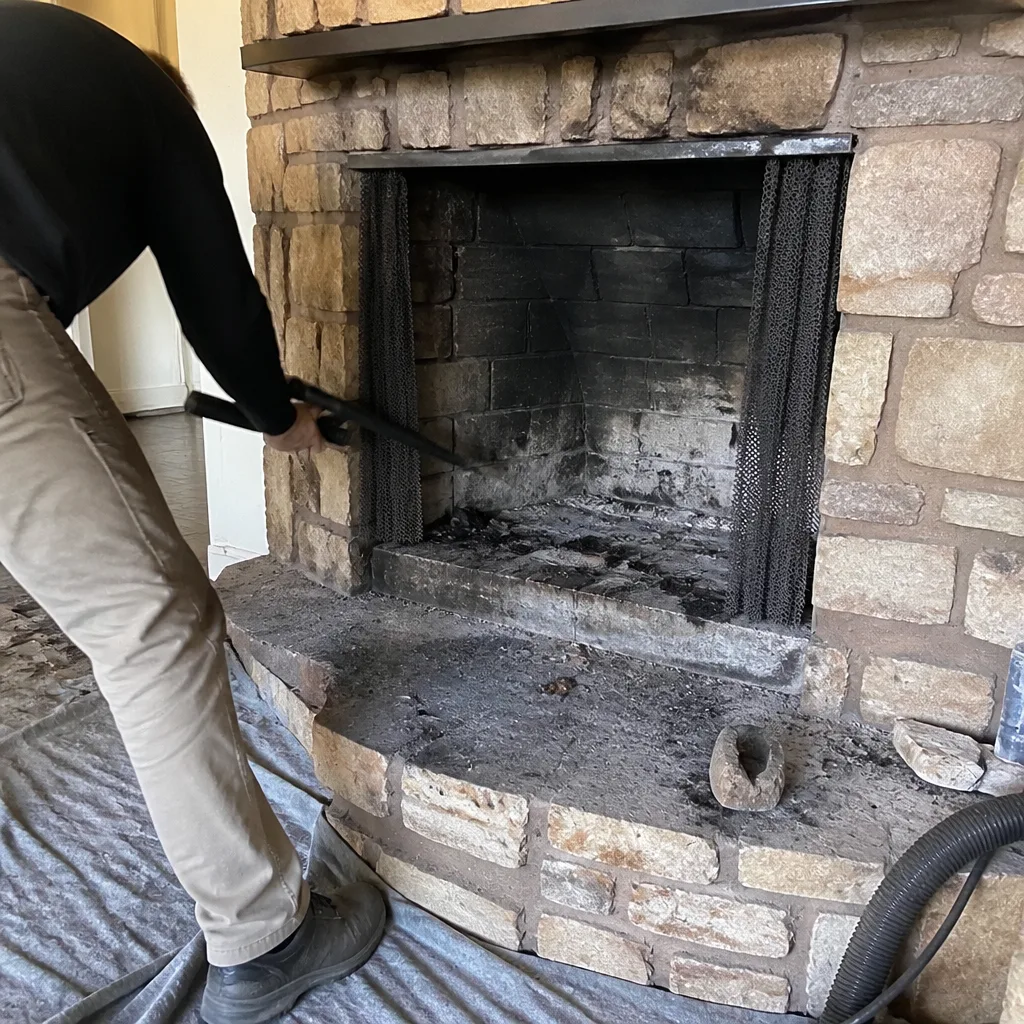
See the difference
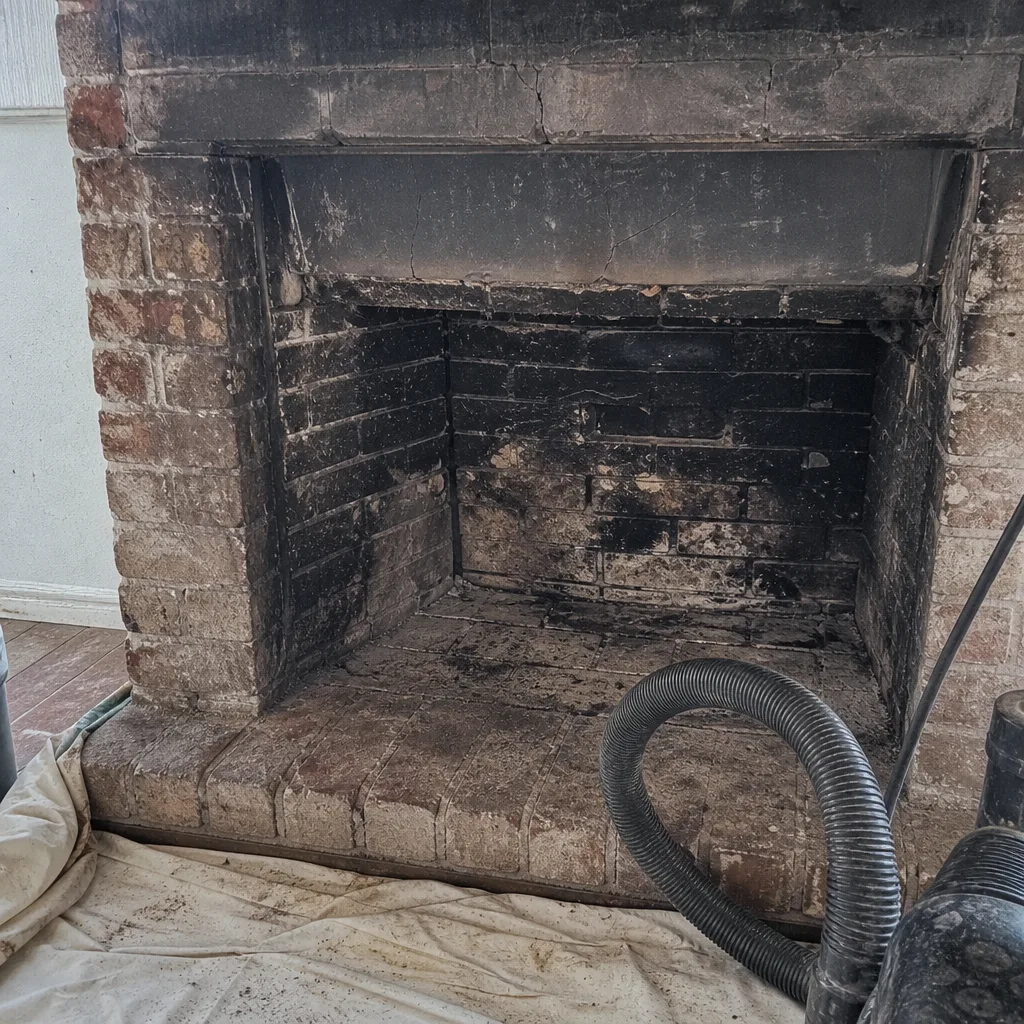 Before
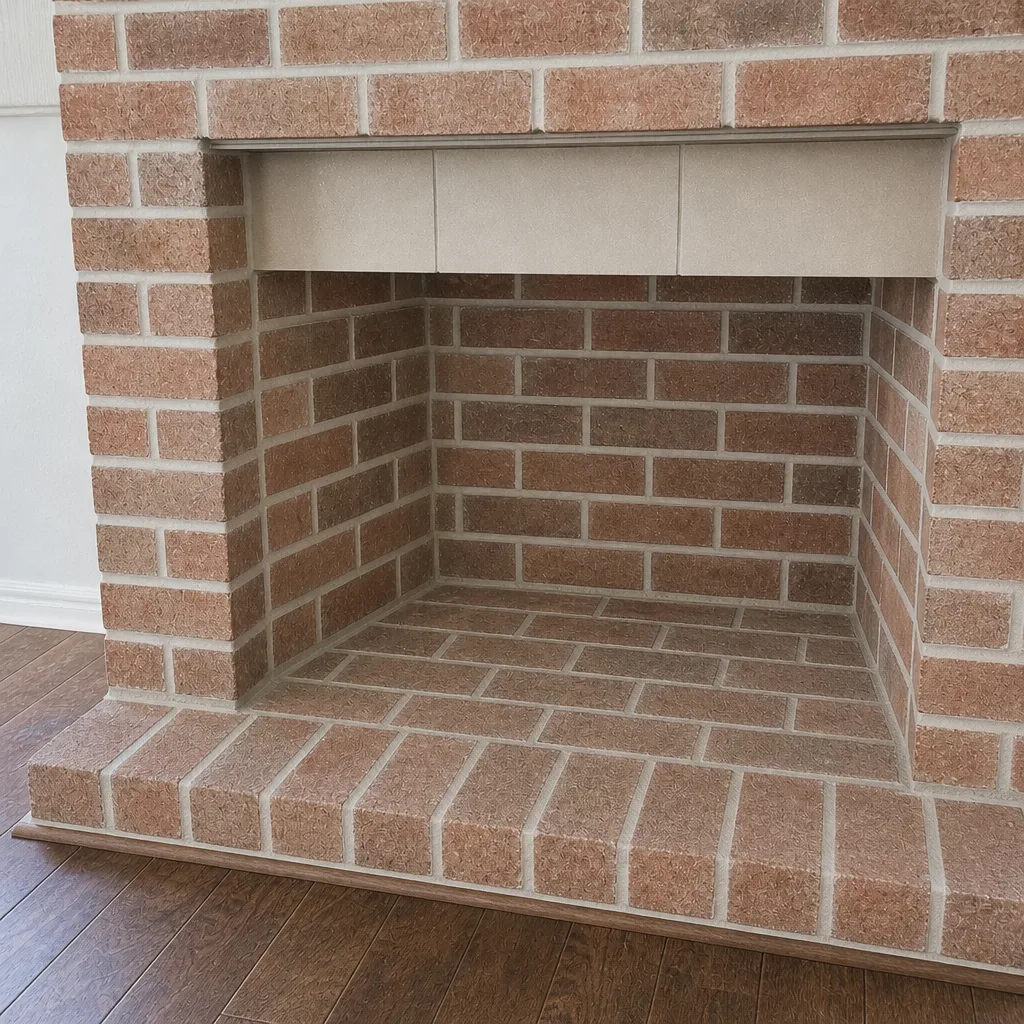 After
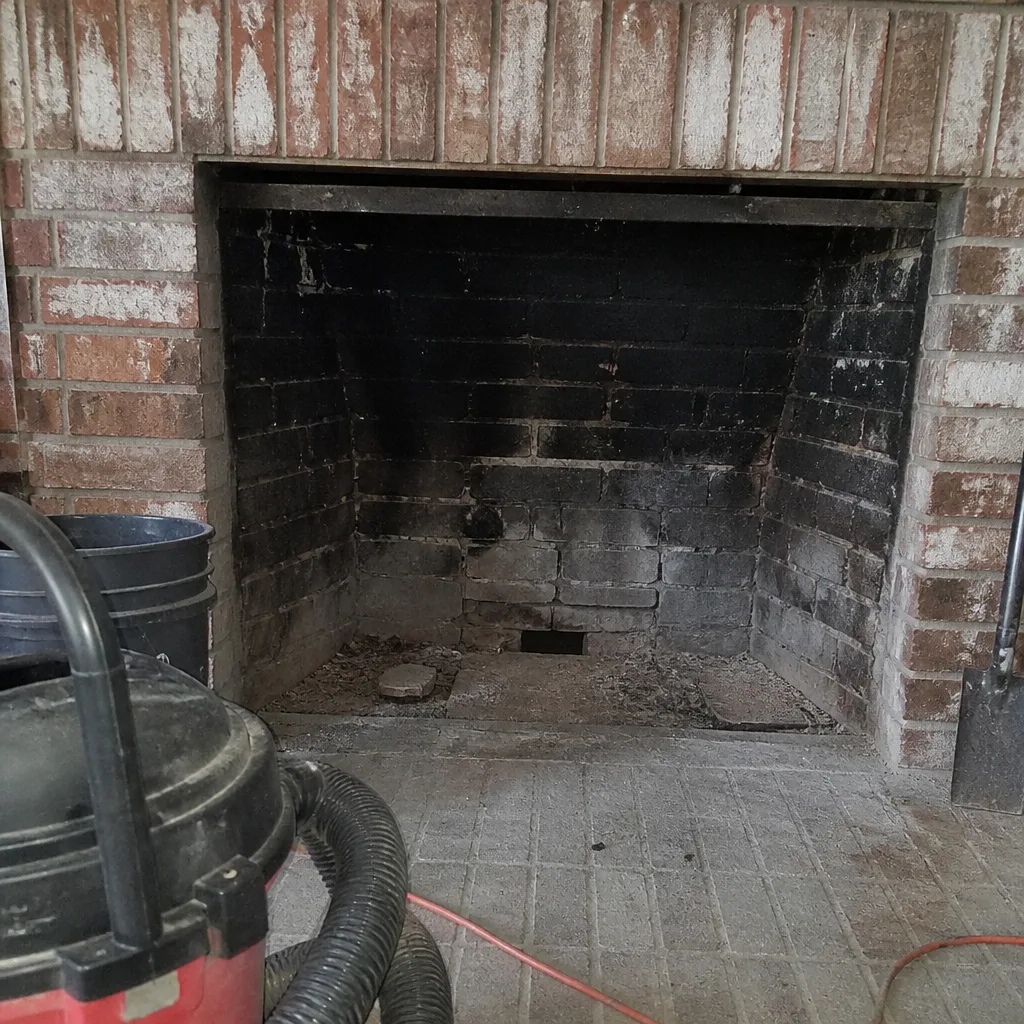 Before
 After
 Before
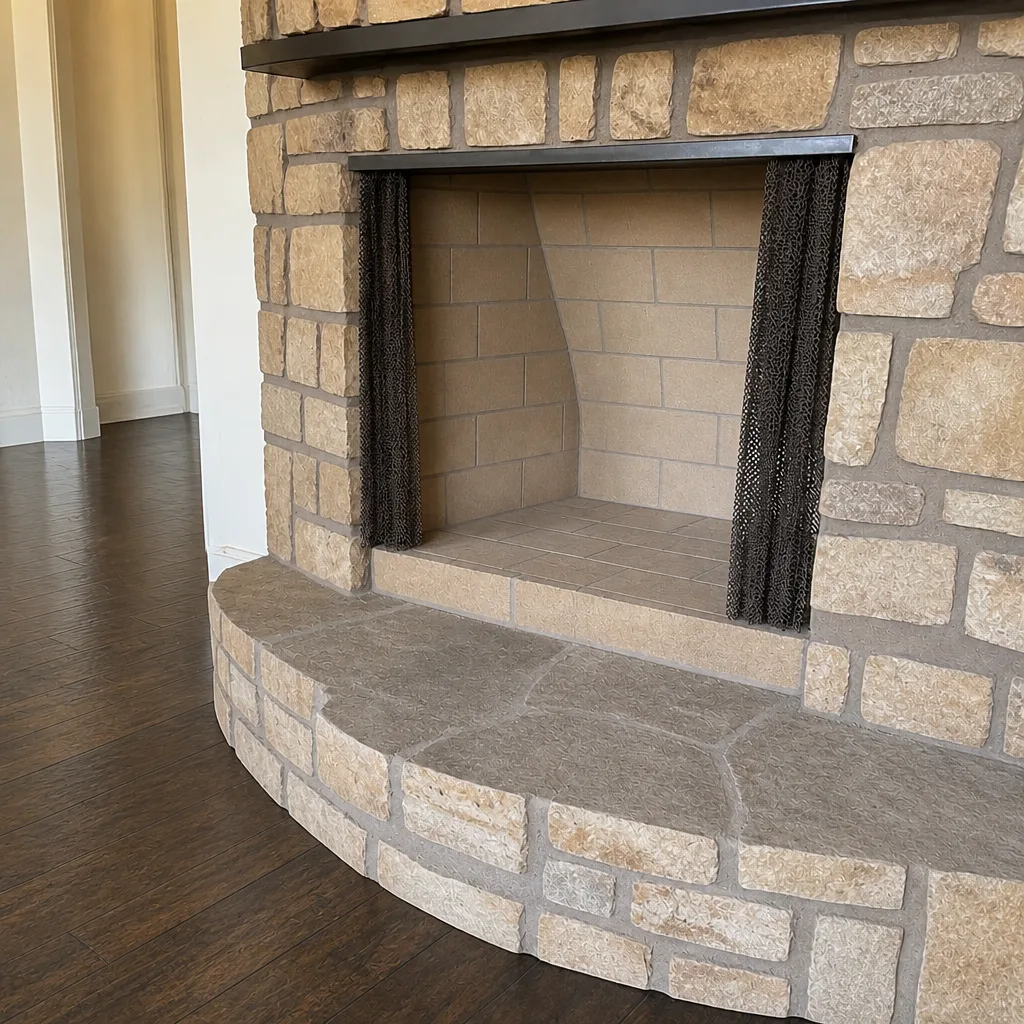 After
When to Call a Professional
Some situations call for a professional without waiting for the calendar to catch up. Call us if smoke rolls into the room when you light a fire, if you smell creosote or soot indoors, or if you see water stains on the ceiling or the chimney breast after rain. Call after any hail or high-wind event that visibly damaged the cap, crown, or flashing. Call if draft has weakened, if the damper won’t seal, or if you’ve moved into a Mesquite home and don’t know when the chimney was last inspected. Call if you’re burning more than two cords and haven’t had a midseason check. And call if a prior inspection recommended a liner repair and you’ve never had it confirmed with camera evidence.
Mesquite Chimney Sweep offers free estimates in Mesquite. Call (833) 246-4886. We answer 24/7. Fast dispatch from 7am to 7pm, Sunday through Friday. Every recommendation comes with photos you can see for yourself, and we’ll tell you plainly when work can safely wait.
Frequently Asked Questions
Once a year for most households, plus a ground check after any significant hail or high-wind storm. Households burning more than two cords of wood a year should add a midseason camera inspection. The annual visit is the baseline; storm checks and midseason looks are what keep it current.
You can and should check the accessible parts from the ground: the cap, crown, flashing, masonry, and firebox. What you can’t evaluate yourself is the inside of the flue, the smoke chamber, and the creosote level. Those require a camera and a trained eye, and that’s the professional part.
The cap, then the crown. Hail damages the exposed top of the chimney more than anything else, and a damaged cap or cracked crown is the most common storm-related defect we find. Ground check first, photograph what you see, then get it evaluated.
Because the problems that matter most are on the inside. Cracks in the flue liner, separated liner sections, spalled surfaces, glazed creosote, and obstructions are all invisible from outside. A camera inspection is the only way to see the flue interior without disassembling the chimney.
You need it if the camera shows damage, and you should see the photos before agreeing to anything. Liner damage lets heat and gases reach the structure around the flue, which is a fire risk. A moderate problem may be addressed with ceramic resurfacing like HeatShield; a more extensive one may need a full reline. Ask to see the evidence, and ask whether the work can safely wait.
Start with a baseline professional inspection, then keep every report and its camera photos in one place. Add dated ground-check photos each season and note any repair or deferred recommendation. From there, compare year to year so you can see a crack getting longer or a cap getting worse before it becomes a bigger job.
The Bottom Line
A chimney maintenance checklist works when it’s built around what actually fails where you live. In Mesquite, that means storm-season ground checks, a professional sweep and inspection before the burn season, and a midseason look if you burn heavy. Check the cap, crown, and flashing from the ground after every major storm. Leave the flue interior to a camera and a trained eye. Keep a record so slow deterioration gets caught while it’s still small. That’s the difference between a repair you saw coming and one you didn’t. If you’d rather have one team cover the sweep, the inspection, and the repair, that’s what we do. Call (833) 246-4886 for a free estimate.
Written by the team at Mesquite Chimney Sweep.